Blog
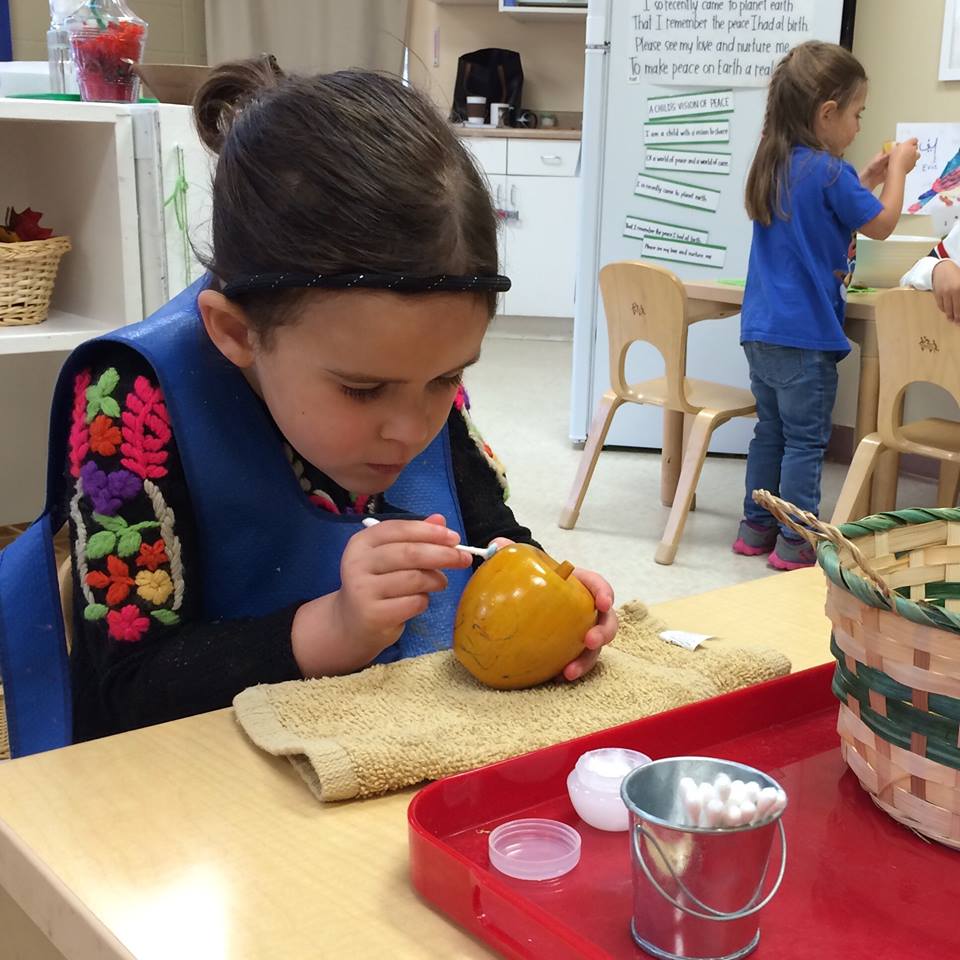
With so many new children and families entering Primary II this year, Monica and I realized that it would be beneficial for us to address the incredibly important area of the classroom known as Practical Life. Perhaps your child has come home and told you she did pouring work, polishing work or even arranged flowers. Maybe you have watched uneasily during drop-off as a child carried a tray full of glass objects and just were not sure what the point of all this was.
For the past 35 years I have been told that I talk too much. That problem intensifies when I am passionate about something. Lately, I’ve been trying to figure out how I can explain the beauty of the Montessori Method to families who tour, members of our community and the greater world in a concise and succinct manner. Task failed until last week.
“Our aim is not only to make the child understand, and still less to force him to memorize, but so to touch his imagination as to enthuse him to his innermost core.”
-Maria Montessori
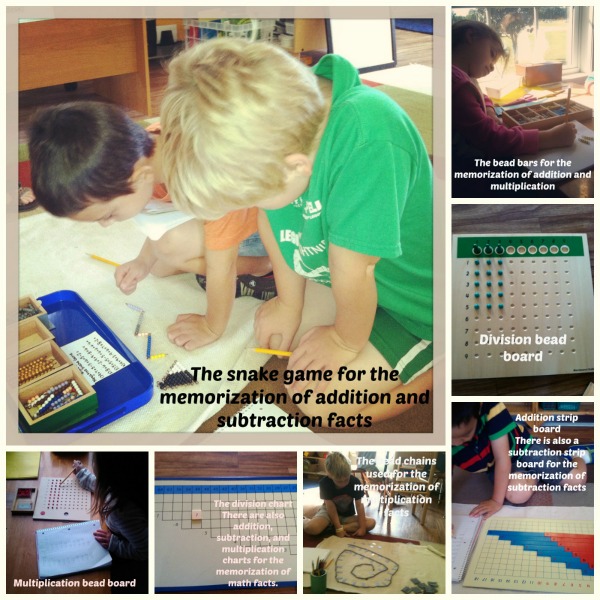
To memorize means to learn by heart and to fix experience and knowledge in our memory. A child can memorize information in two ways. One way is to learn something mechanically and by rote. The second way is to prepare and organize a variety of activities all having the same aim that the child can work through. This variety of activities keeps the child’s imagination alive. Maria Montessori developed many different exercises for the memorization of facts for elementary students. This repetitive practice allows the child to memorize their math facts in an engaging way.
Below are just a few of the materials that Maria Montessori developed for the memorization of math facts:
Chiaravalle Montessori School also posted a great blog about the memorization of math facts as taught through the Montessori Method : http://www.chiaravalleobservations.org/2011/03/the-facts-are